English football to trial new rule to address goalkeeper tactical timeouts

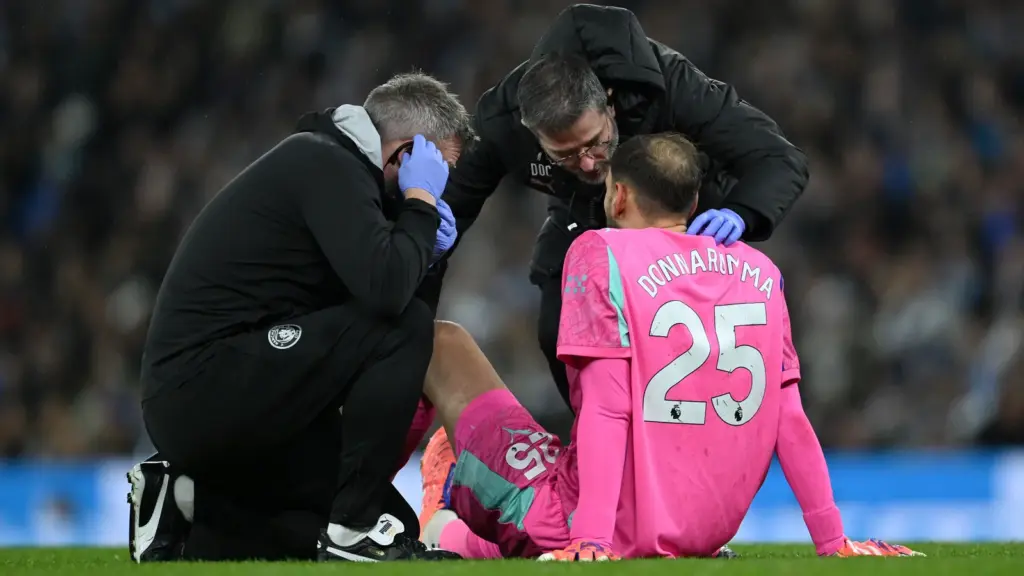
English football is set to implement a trial designed to eliminate the practice of goalkeepers using tactical timeouts. This measure has been agreed upon by key organisations including the Football Association, Premier League, English Football League, National League, and Women’s Super League, following permission from the International Football Association Board (Ifab).
The initiative stems from discussions led by Pro Ref, with chief refereeing officer Howard Webb, aimed at addressing the increasing use of goalkeeper stoppages to disrupt play or allow for tactical instructions. The agreed-upon trial mandates that if a referee signals for a physio to treat a goalkeeper, the team’s coach will have 10 seconds to designate an outfield player to leave the pitch for one minute after play resumes. This choice must be communicated to the fourth official. Should no player be selected within the 10-second window, the team captain will be required to leave the field.
Addressing Tactical Stoppages
The tactic of goalkeepers signalling for treatment to create a timeout has become a frequent and contentious issue in recent seasons. This often involves the goalkeeper sitting on the turf, prompting other players to gather in the technical area for a team talk. Once instructions are delivered, the goalkeeper typically resumes play. Such stoppages have also been used to interrupt an opponent’s momentum when they are performing well.
One notable incident occurred in November, when Leeds United boss Daniel Farke accused Manchester City goalkeeper Gianluigi Donnarumma of feigning injury to manipulate the rules and halt play. Additionally, in December, Gary Neville suggested that Newcastle’s Aaron Ramsdale went down against Manchester United following an instruction from Lewis Hall, which he believed originated from Magpies boss Eddie Howe. In March, Brighton boss Fabian Hurzeler also criticised David Raya for what appeared to be a tactical timeout.
The measure is intended to be a proactive deterrent rather than a reactive response to team talks. Officials will not prevent players from approaching the touchline during an injury treatment, but the requirement to play with 10 players for a minute is expected to act as a sufficient disincentive. This is particularly relevant in the closing stages of matches, where teams often use goalkeeper stoppages to manage the clock and maintain a result, a scenario that would now necessitate playing with fewer players.
Trial Implementation and Exemptions
The first match to feature this trial is scheduled to be the Carabao Cup preliminary round tie between Tranmere and Rochdale on Saturday. A variation of this rule, where the captain consistently leaves the field, is also being trialled in the Australian A-League.
The trial aligns with discussions held at Ifab’s AGM in February, where head of referees Pierluigi Collina highlighted the importance of finding a solution to the goalkeeper tactical timeout issue. Collina had previously instructed officials at the 2026 World Cup to prevent players from going to the technical area during all stoppages. However, English football stakeholders concluded that simply restricting access to the technical area would not be enough to deter coaches from using goalkeepers to break up play.
The trial’s approach mirrors the existing rule for outfield players, who must leave the field for one minute if a physio attends to them. Match of the Day pundit Danny Murphy had previously suggested a similar change, stating that if a goalkeeper goes down injured, an outfield player should be removed to ensure fairness.
There are specific exemptions where a teammate will not be required to leave the field:
- If the goalkeeper states they do not need the physio and did not cause play to stop.
- If the goalkeeper and an outfield player have collided.
- If the goalkeeper is fouled and requires immediate treatment.
- If the goalkeeper is bleeding.
- If there is a serious injury requiring substitution or a concussion.
In cases where a goalkeeper is substituted, the substitution will not be delayed. Concerns have been raised by some stakeholders that the requirement for a player to leave the field for one minute could potentially lead to both goalkeepers and outfield players attempting to continue playing while injured. The results of these trials will be evaluated by Ifab during its meetings throughout the seasons, potentially leading to a permanent global law change from the 2027-28 season.
Source: bbc.com

