World Cup 2026 prize money revealed as final approaches

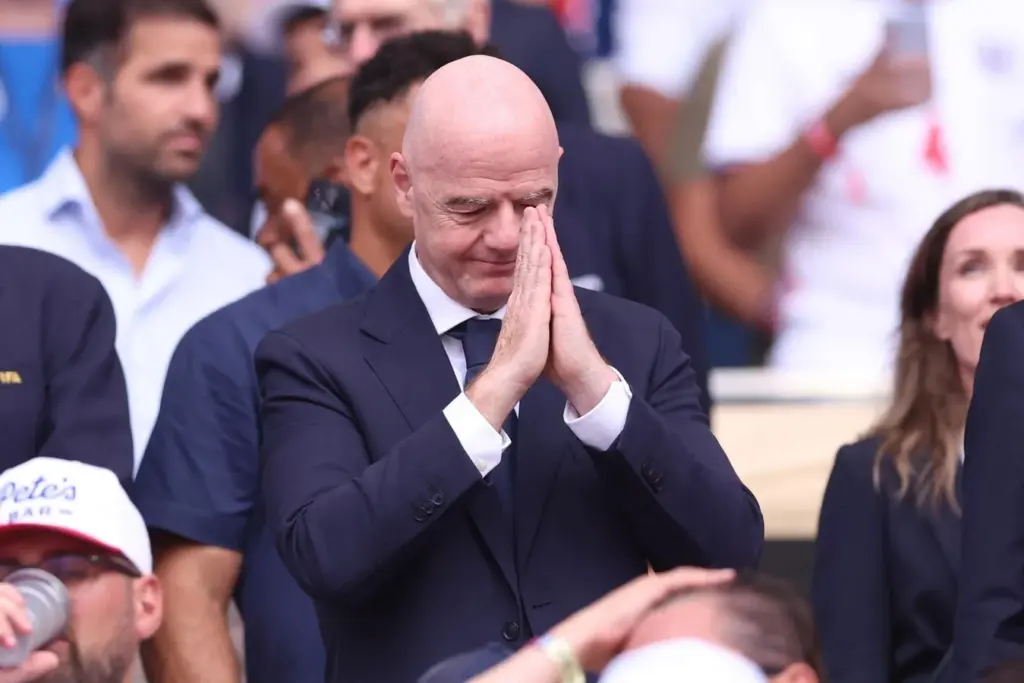
Record Prize Money for World Cup Finalists
The 2026 World Cup final, featuring Spain and Argentina, offers substantial financial rewards alongside the championship title. The winning team is set to receive a record-breaking sum of $50 million. The runner-up will be awarded $33 million.
This year’s tournament marks a significant increase in prize money. For Spain, a victory would secure the country’s second World Cup title. Argentina, on the other hand, could achieve its second consecutive title and its fourth overall championship.
The total prize money distribution for the tournament includes:
- Champion: $50 million
- Runner-up: $33 million
- 3rd place: $29 million
- 4th place: $27 million
- 5th-8th place: $19 million
- 9th-16th place: $15 million
- 17th-32nd place: $11 million
- 33rd-48th place: $9 million
FIFA’s Financial Growth and Tournament Expansion
FIFA has reported significant financial achievements, with revenues reaching nearly $5.8 billion in 2022, a year that included the World Cup in Qatar. This figure surpassed earnings from previous tournaments like Russia 2018 and Brazil 2014, and was almost double the revenue generated in South Africa.
The organization’s president, Gianni Infantino, has projected that the 2026 World Cup could be the first sporting event in history to generate $10 billion. This expanded tournament, co-hosted by the United States, Mexico, and Canada, features 104 games, contributing to substantial commercial growth and inflated broadcast rights.
The World Cup‘s financial success is attributed to its unique position as a global mega-event. Professor Rob Wilson of the University Campus of Football Business noted that the limited supply of the tournament, occurring every four years, combined with increased demand over the last two decades, allows FIFA to set high rates.
The tournament’s primary presence in the United States, hosting 78 of the 104 games, has been a key factor in its commercial success. This market has attracted new partnerships and significant investment. Major commercial partners such as Adidas, Coca-Cola, Visa, Aramco, and Hyundai contribute between $80 million and $100 million annually through their long-term deals.
Additionally, this World Cup has drawn sponsors like Bank of America and McDonald’s, with associations valued at up to $100 million. Other supporters, including Home Depot and American Airlines, are also involved.
FIFA views marketing rights as a significant area for future growth, with commercial revenues having nearly quadrupled since the 2007-2010 cycle. Phil Carling, managing director of football at Octagon, highlighted the immense global appeal of football as both a sport and a cultural phenomenon, stating that the World Cup delivers a global audience at an unparalleled scale.
FIFA estimated that six billion people would follow this tournament. Independent TV viewing figures also underscore the growing interest in the men’s World Cup. For example, the USMNT‘s last-16 match against Belgium was watched by 30 million viewers on a domestic broadcaster. In Canada, an average of 5.4 million viewers tuned in for Canada‘s match against Morocco, marking a record audience for a Canada game.
European countries have also shown strong viewership, with some attracting audiences close to half their population. A FIFA release indicated that Sweden‘s opening group game against Tunisia captured a 96 percent share of the domestic television audience.
Economic Impact and Host City Investments
While FIFA projected a $30.5 billion injection into the U.S. economy from the World Cup, some sports economists suggest the actual economic benefit may be smaller than anticipated. Data from the National Travel and Tourism Office (NTTO) showed that overall international arrivals to the U.S. in June were largely unchanged compared to the previous year, at a +0.2% increase.
Arrivals from Europe and Asia saw decreases of -1.2% and -5.6% respectively, while regions like Africa and South America experienced increases of +13.8% and +4.7%. Hotel data indicated that while room rates increased in World Cup host cities, there was no corresponding rise in occupancy or room demand.
Professor Michael Edwards of North Carolina State University noted that discussions about economic impact in sports often serve to justify public spending benefiting private entities. Andrew Zimbalist, professor emeritus of economics at Smith College, stated that FIFA‘s projection of a $30.5 billion gain for the U.S. economy was never reasonable.
FIFA‘s pitch to host cities included the promise of large crowds with an even split between domestic and international visitors. However, the U.S. has faced challenges in attracting foreign tourists. The NTTO data for June suggests no significant influx of international visitors, making it difficult to conclude that the tournament was a substantial boon for international inbound travel.
The economic payoff from hosting major sporting events often falls short of projections, partly because local leaders may be swayed by the idea of hosting marquee events. Projections can be overly optimistic, failing to account for trade-offs such as normal tourists avoiding areas due to congestion and higher prices.
Host cities in North America, including 11 in the U.S., three in Mexico, and two in Canada, were required to invest between $100 million and $200 million in infrastructure, transportation, and security. FIFA also mandated that host cities shield it from municipal taxes and seek exemptions from applicable state taxes where possible. In cases where taxes could not be legally waived, host cities often agreed to reimburse or indemnify FIFA for those costs. Three states, Florida, Georgia, and Missouri, waived at least $57.8 million in combined state and local tax revenue to host games for the World Cup.
Some U.S. cities opted not to bid for hosting World Cup games due to the perceived high costs. Chicago withdrew its bid in 2018, citing a lack of assurances to protect local taxpayers from financial liability. Las Vegas considered bidding but encountered a logistical issue with the size of the pitch required for FIFA regulation games not fitting within Allegiant Stadium without significant cost. Instead, Las Vegas hosted 10,000 watch parties during the tournament.
Read Also
- England coach Thomas Tuchel addresses squad after World Cup semi-final defeat
- Thomas Tuchel's handling of Kobbie Mainoo in World Cup training draws scrutiny
- Arsenal target Morgan Rogers could command over £100m fee from Aston Villa
- Arsenal preparing offer for Ezri Konsa as William Saliba faces injury assessment
Source: eu.usatoday.com

